
frosted glass divider
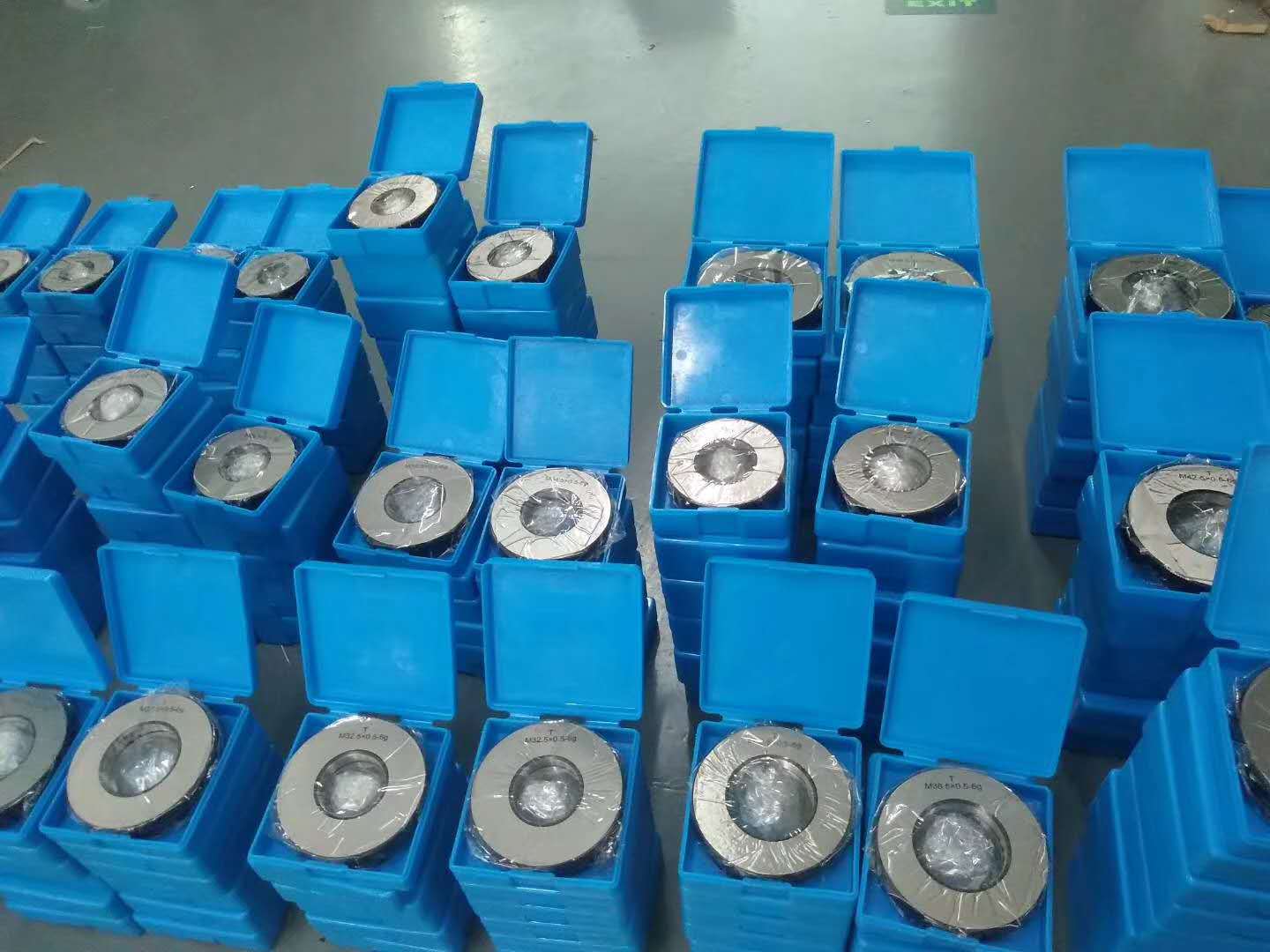
Understanding Screw Thread Ring Gauges Screw thread ring gauges are essential tools in the field of manufacturing and quality control. They play a pivotal role in ensuring that threaded components meet specified dimensions and tolerances. This article delves into the fundamental aspects of screw thread ring gauges, their types, applications, and importance in various industries. What is a Screw Thread Ring Gauge? A screw thread ring gauge is a circular tool used to measure the external diameter and pitch of screw threads. It is designed to check the accuracy of threaded parts, particularly bolts and screws. Made from high-quality materials, these gauges are precision-engineered to provide reliable assessments of screw threads' conformity to established standards. Types of Screw Thread Ring Gauges Screw thread ring gauges come in two primary types 1. Master Gauges Used for calibration and verification of other gauges. They are exceedingly precise and offer a standard against which other measurements can be compared. 2. Working Gauges These are used in the production environment to test the threads of individual components. They indicate whether a part meets acceptable tolerances and is usually less expensive than a master gauge. In addition to these, ring gauges can be further categorized based on their application - Go Gauges These gauges are designed to verify whether a threaded component fits within the specified limits. If the component passes the go gauge, it means the dimensions are within tolerance. - No-Go Gauges These are used to ensure that the component does not exceed the maximum permitted size. If the component fits into the no-go gauge, it is considered out of tolerance and rejected. Importance of Screw Thread Ring Gauges In industries such as automotive, aerospace, and machinery manufacturing, precision in thread dimensions is critical. A minor deviation can lead to failures in assembly or create safety hazards. Therefore, screw thread ring gauges are indispensable for several reasons screw thread ring gauge 1. Quality Assurance These gauges help maintain consistent quality in production. By regularly checking threaded components, manufacturers can identify issues early in the production process, minimizing waste and potential recalls. 2. Standardization Screw thread ring gauges conform to international standards, such as those set by the American National Standards Institute (ANSI) or the International Organization for Standardization (ISO). This ensures that components can be used interchangeably across different manufacturers and applications. 3. Cost Efficiency Investing in accurate screw thread ring gauges can save money in the long run by reducing scrap rates and ensuring that components fit correctly during assembly. This efficiency can significantly enhance overall production rates. Applications in Various Industries Screw thread ring gauges are widely utilized across multiple sectors - Automotive Industry In automotive manufacturing, where precision and safety are paramount, these gauges ensure that all threaded components like engine bolts and transmission screws meet strict specifications. - Aerospace The aerospace industry requires exceptionally high standards for threaded components, as even minute errors could result in catastrophic failures. Screw thread ring gauges ensure that screws and bolts used in aircraft assemblies comply with the highest safety standards. - General Manufacturing Many machinery parts incorporate screw threads. Regular audits with ring gauges facilitate efficient production and assembly processes in various manufacturing scenarios. Conclusion Screw thread ring gauges are critical tools in the quality control processes of various industries. Understanding their types, functions, and applications is essential for manufacturers aiming to uphold high standards. By ensuring that threaded components meet specific tolerances, these gauges not only enhance product reliability but also contribute significantly to overall operational efficiency and safety in manufacturing environments. As industry standards evolve, the development of advanced screw thread gauges will continue to play a fundamental role in promoting quality assurance in threaded components.
about
frosted glass divider
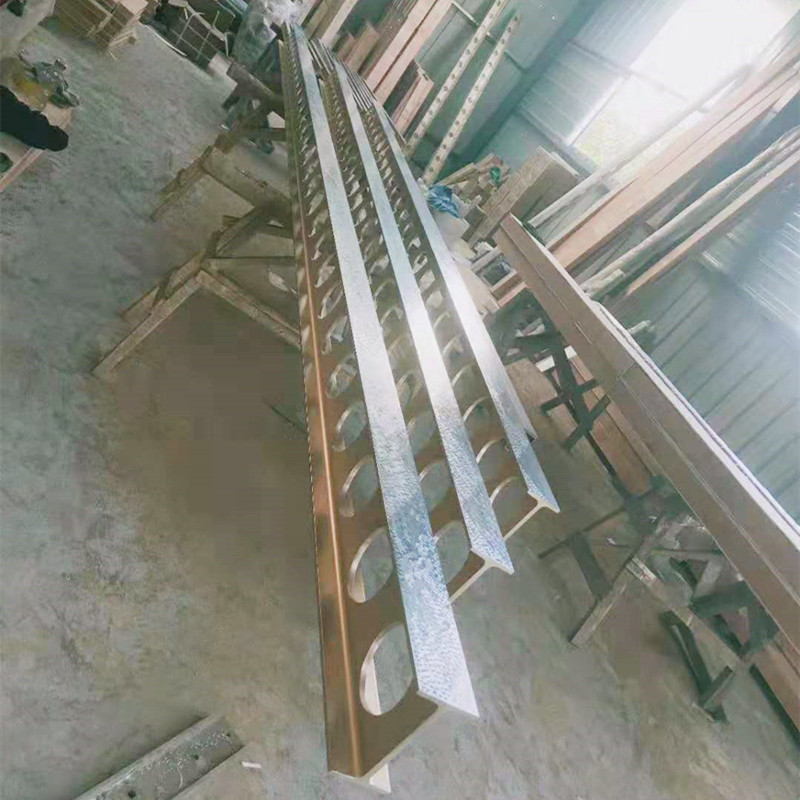
Why Angle Plates Still Matter in the Era of CNC and Granite If you’ve spent time on a shop floor, you know the ritual: blue dye, a master surface plate , and that moment of truth when contact tells all. Angle plates are the unsung companions in that dance. We’ve been putting STR’s Cast Iron Angle Plates through their paces, and, to be honest, they punch above their weight in fixture building and squareness checks. Industry Snapshot Trend-wise, we’re seeing three currents: 1) more shops pair cast-iron angle plates with granite surface plate s for hybrid metrology; 2) automation cells need rigid, repeatable fixturing; 3) traceable inspection—DIN/ASME-grade hardware, documented flatness/squareness, the works. Granite still rules for reference flatness, but well-made cast iron (properly aged and scraped) remains the practical fixture backbone. What the Product Is Product: Cast Iron Angle Plates from STR Machinery (Origin: No.17, Building 11, Hardware Building Material City, Botou, Cangzhou City, Hebei Province, China). Machined faces are square and parallel; used for fixture building and squareness/parallelism checks against a granite surface plate or as part of a tooling stack. Key Spec Typical Value (≈, real-world may vary) Material HT250 close-grained cast iron, pearlitic structure Hardness HB 170–240 Accuracy Grades DIN 875 Grade 0/1; squareness ≤0.02–0.05 mm/300 mm Flatness of faces Up to ≤5 μm/300 mm (Grade 0 reference) Surface finish Ra ≈1.6–3.2 μm (ground + hand-scraped pads) Stress relief Thermal anneal + artificial aging; optional natural aging Options T-slots, clamping holes, ribbing, lifting slots, custom sizes How They’re Made (short version) Casting HT250 → rough machining → thermal stress relief → semi-finish grinding → fine machining → scraping/contact spotting against certified granite surface plate → inspection with autocollimator and square masters → preservation coating. Service life? With sane loads and periodic oiling, 5–15 years isn’t unusual. Many customers say re-scraping after 5–7 years keeps them “like new.” Where They Get Used Toolroom setups on a granite surface plate Precision machining fixtures; vertical datum references Inspection of squareness/parallelism for prismatic parts Light welding jigs (when distortion control matters) Assembly cells for robotics/automation Quick data point: a 400×300×300 mm plate showed squareness error of 0.018 mm/300 mm in our trial; flatness mapped at 4.2 μm over 300 mm using a Grade 00 granite reference. Not lab-grade perfection, but very respectable. Vendor Comparison (at-a-glance) Vendor Origin Accuracy Certs Lead Time Customization STR Machinery Hebei, China DIN 875 Grade 0/1 (test sheet) ISO 9001 ≈15–30 days High (T-slots, ribbing, sizes) Vendor A (Granite focus) EU DIN 876 Grade 00 plates; angle plates limited ISO 17025 lab ≈20–45 days Medium Vendor B (General) US Grade 1 common ISO 9001 ≈10–35 days Medium–High (costly) Customization and QC STR will tailor T-slot spacing, face dimensions, bracing ribs, and lifting features. QC follows DIN 875 and references DIN 876 and ASME B89.3.7 for checks against a certified granite surface plate . Test artifacts: autocollimator, precision square, 0.001 mm indicators. A typical test sheet shows 20–30 contact points/25×25 mm pad after scraping—what you want for reliable clamping. Mini Case Study A robotics integrator needed a square, compact fixture to align gearbox housings during laser scanning. Two 500×400×400 mm STR plates with T-slots were paired back-to-back on a Grade 00 granite surface plate . Result: cycle time dropped ≈12% because parts located faster; squareness Cpk improved from 1.23 to 1.67 over three weeks. Anecdotal? Sure, but consistent with what others report. Final Thoughts Granite for reference, cast iron for doing—the old combo still works. And these angle plates, when scraped and certified, make a compelling, cost-savvy fixture base. Authoritative Citations ASME B89.3.7 – Granite Surface Plates: Specifications and Calibration [ASME]. DIN 875 – Squares and Angle Plates: Accuracy Classes and Inspection [DIN]. DIN 876 – Flatness Tolerances for Surface Plates [DIN]. ISO 9001 – Quality Management Systems Requirements [ISO].
-

High quality industrial productsagement

High quality industrial products
View Details -

Meet the diverse needs of customers

Meet the diverse needs of customers
View Details -

Strict quality control

Strict quality control
View Details -

Top raw materials

Top raw materials
View Details -

Trusted supplier

Trusted supplier
View Details
Our application



news and information
vratový ventil z oceli
Ocelové klapky Klíčový prvek v průmyslových aplikacích Ocelové klapky, známé také jako klapkové vent

water gate valve
The water globe valve is a pivotal component in fluid control systems, lauded for its versatility, p
Valves Available for Purchase Now at Competitive Prices
Exploring the Market for Valves for Sale A Comprehensive Guide In industrial applications across var
 English